
Data Orchestration: The Conductor Behind the Pipelines
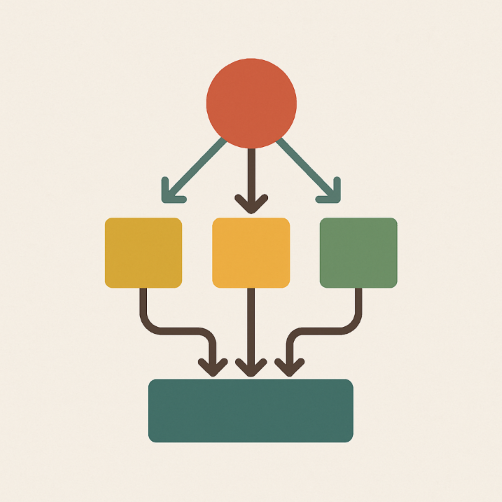
Image created by the author
If you’ve ever heard the term “data orchestration” and wondered, “What exactly does that mean?”, my goal is to make that clearer.
What Orchestration Actually Means
Think of orchestration as coordinating a series of steps so that work happens in the right order, time, and with the right checks.
It’s not the step itself; it’s how you manage the sequence of steps, and how you make sure the whole process flows smoothly.
If you’ve seen an orchestra perform, you’ve seen how a conductor doesn’t play the instruments but still makes sure every musician starts and stops at the right moment. Orchestration in data is the same idea, but instead of musicians, you have tasks like:
- Pulling data from a source system.
- Transforming it into a standard format.
- Running validation checks.
- Delivering it to a reporting system or compliance package.
Without orchestration, you’re basically asking each “musician” (task) to guess when to come in, and hoping they’re in sync.
Pipelines vs. Tools vs. Orchestration
Here’s where people often get confused:
- A pipeline is the process of moving data from one stage to another — not a specific tool.
- The tools are the instruments you use to make that process happen (e.g., ETL scripts, validation programs, reporting tools).
- Orchestration is what ties all of those tools together into a single, repeatable workflow.
Without orchestration, you might be running each tool manually. With orchestration, each step knows when to start, waits for its dependencies, and automatically hands off to the next.
A Simple, Non-Technical Example
Imagine you run a busy coffee shop. Each morning:
- The baristas prep the espresso machines.
- The bakers pull fresh pastries from the oven.
- The front counter opens for customers.
If the counter opens before coffee or pastries are ready, customers are waiting around. If the bakers start too late, the baristas run out of food to sell.
You could manually tell each team when to start, but that requires constant coordination. Alteratively, you could set up a simple system where ovens start baking at 5:00, baristas begin prepping at 5:30, the counter opens at 6:00, so it all happens in the right order without you micromanaging it every day.
That’s orchestration. You simply ensure they happen in sync, reliably.
What Orchestration Looks Like in Data Work
For data teams (including those working with clinical trial data), orchestration might mean:
- Running an extract job only when yesterday’s data file has arrived.
- Automatically triggering data cleaning scripts before a transformation job starts.
- Running compliance checks after a dataset has been created, and stopping the process if it fails.
- Sending an alert if any step doesn’t complete as expected.
The key is that orchestration makes the process hands-off, repeatable, and trackable. You’re not waiting on one person to remember to “execute.”
Orchestration Tools: The “Conductor’s Podium”
Just like a conductor needs a podium and a score, data teams need tools to manage orchestration.
Some examples:
- Apache Airflow: A popular open-source platform where you define workflows as Directed Acyclic Graphs (DAGs) in Python. Great for complex dependencies and scheduling.
- Prefect: Similar to Airflow but with a simpler developer experience, strong cloud integration, and easy local testing.
- Dagster: Focuses on data assets and lineage, making it clear what data was produced, when, and by which step.
- AWS Step Functions: Ideal for cloud-native, event-driven workflows; integrates well with AWS services without needing servers.
For clinical data work, the tool you choose depends on:
- How complex your workflows are?
- Where your data lives (on-prem, cloud, hybrid)?
- Compliance and audit requirements.
- Your team’s skill set.
Choose one that makes your workflows more reliable, easier to monitor, and easier to reproduce.
Why This Matters, Especially in Clinical Data
In most regulated environments, including clinical research, orchestration isn’t even part of the workflow.
Right now, many processes are still run manually:
- Someone checks if new data has arrived.
- Someone kicks off the transformation scripts.
- Someone runs the compliance checks.
- Someone packages the results.
This happens study by study, project by project, often with no consistent structure for how the work is triggered or connected.
In other words:
- We don’t just lack standardized data pipelines, we also lack a standardized way of orchestrating those pipelines.
- The “flow” of work exists mostly in people’s heads, email chains, or ad-hoc instructions. This is not a system that can run reliably every time.
Orchestration changes that. It introduces a repeatable, automated, and transparent way to move data from point A to point B, step by step, without constant human intervention.
For regulated environments that means:
- Reliability: The process runs the same way every time.
- Traceability: Every task run, success or failure, s logged for audit purposes.
- Scalability: Once you’ve built it, you can repeat across studies.
This isn’ta tech upgrade — it’s a mindset shift. It is important we start thinking in terms of systems and design.
Final Thought
Orchestration is a capability that makes everything run smoother. It’s the invisible conductor making sure your data pipelines perform in harmony — whether you’re running dashboards for a business or delivering a submission package for a clinical trial.
If you’ve ever had to run the same steps in the same order more than once, orchestration is worth understanding.